
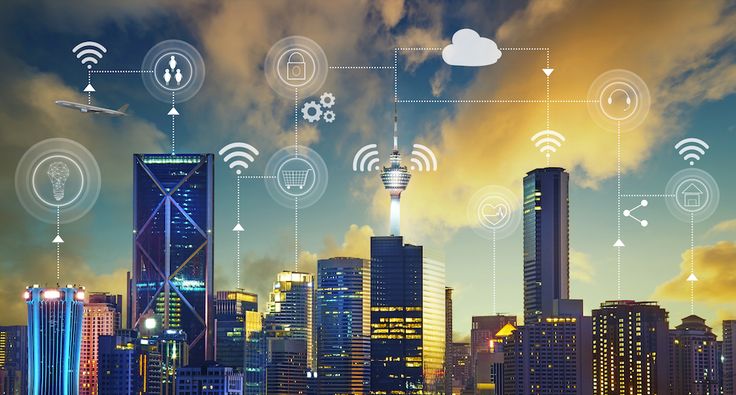
In an era where milliseconds matter and data sovereignty is paramount, edge computing emerges as the architectural paradigm shift that redefines how we process, analyze, and act upon information in real-time.
Understanding the Edge Revolution
Traditional cloud computing centralizes processing power in massive data centers, creating latency challenges for applications requiring instant response. Edge computing addresses this by distributing computational resources closer to where data is generated—whether it's IoT devices, mobile phones, or local servers.
Key Differentiators
- Reduced Latency: Processing at the edge eliminates round-trip delays to centralized cloud servers
- Bandwidth Optimization: Local processing reduces the need for constant data transmission
- Enhanced Privacy: Sensitive data can be processed locally without cloud transmission
- Real-time Analytics: Immediate insights from streaming data sources
Architectural Patterns
Modern edge computing architectures follow a hierarchical model, distributing intelligence across multiple layers:
Cloud Layer
Global orchestration and heavy analytics
Edge Layer
Regional processing and aggregation
Device Layer
Local inference and immediate response
Real-world Applications
Edge computing powers transformative applications across industries:
Healthcare
Real-time patient monitoring with AI-driven anomaly detection at hospital edge servers, ensuring immediate intervention while maintaining HIPAA compliance.
Autonomous Vehicles
Millisecond decision-making for collision avoidance using onboard edge processors, processing sensor data without cloud dependency.
Smart Manufacturing
Predictive maintenance algorithms running on factory floor edge devices, analyzing equipment vibrations in real-time to prevent downtime.
Technical Implementation
Implementing edge computing requires careful consideration of several key technologies:
Key Technologies
Future Outlook
As 5G networks proliferate and AI models become more efficient, edge computing will transition from supplementary architecture to primary infrastructure. We anticipate:
- Edge-native application frameworks becoming mainstream
- Standardization of edge computing interfaces and APIs
- Convergence of edge computing with Web3 and decentralized networks
Conclusion
Edge computing represents more than just a technical optimization—it's a fundamental shift in how we conceptualize distributed systems. By bringing intelligence closer to data sources, we enable applications that were previously impossible due to latency constraints. The edge is not replacing the cloud, but rather extending its reach, creating a continuum of computation that spans from devices to data centers.
The future belongs to architectures that can fluidly move between cloud and edge, adapting to the unique requirements of each application while maintaining security, scalability, and developer experience.